
How to Apply Drawing Salve Safely and Cleanly

A rich topical salve can be a simple addition to a personal-care routine, but clean application still matters. Knowing how to apply drawing salve means using a small amount, keeping the product and skin clean, following the individual label directions, and understanding the limits of traditional topical care.
The word “drawing” reflects traditional terminology rather than a scientifically established ability to pull material from the skin. Modern use should begin with the product’s stated directions and a realistic understanding of what a topical balm can — and cannot — do.
What a Drawing Salve Is
Drawing salves are thick, balm-like topical products formulated with oils, waxes, and varying botanical or mineral ingredients. Their rich texture allows a small amount to stay where it is applied and gives the skin a soft, conditioned feel. The exact intended use depends on the individual formula, so its label should always be the primary guide.
A thoughtful formula matters. Look for a complete ingredient list and clear directions, particularly if you have known sensitivities to essential oils, botanicals, lanolin, or beeswax. Natural ingredients can still cause irritation for some people.
There is also an important distinction in product names. Traditional drawing salves should not be confused with corrosive products sometimes sold as “black salve.” Do not use products that promise to remove moles, growths, or skin lesions by burning or destroying tissue. Those products can cause serious harm. A topical salve belongs in a modest personal-care routine, not as a way to manage unexplained skin changes.
How to Apply Drawing Salve Step by Step
Start with clean hands and clean, intact skin. Follow any cleansing or preparation instructions provided on the product label, then pat the area dry.
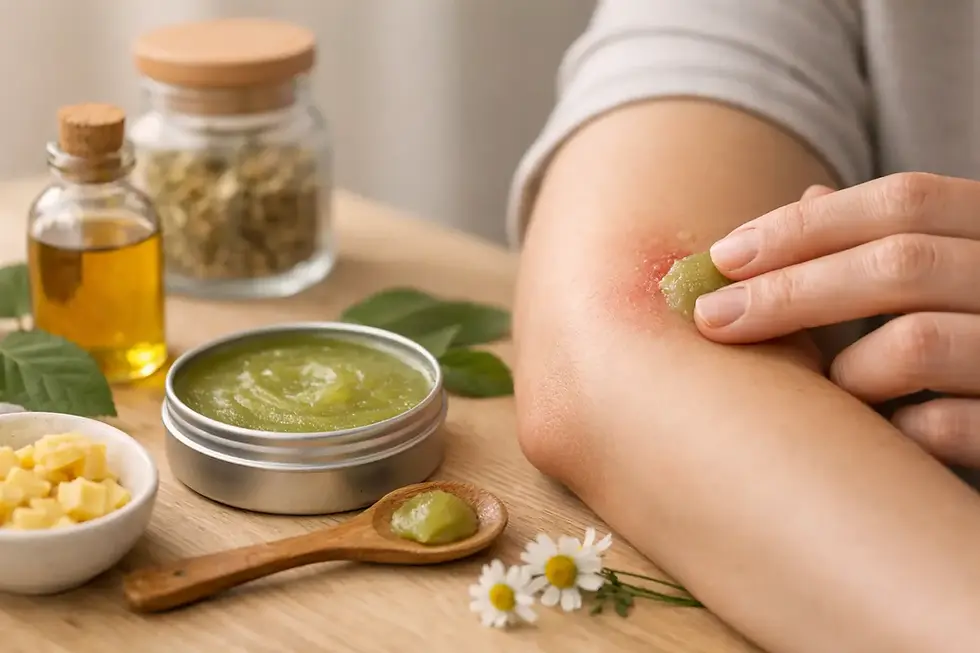
Using a clean fingertip, cotton swab, or small cosmetic spatula, apply a small, even amount. Because salves are rich and concentrated, more is not necessarily better.
If the product label recommends covering the application, follow those directions and use a clean covering. Otherwise, allow the salve to remain on the skin according to the stated instructions.
Wash your hands after application, close the container securely, and keep applicators clean. Discontinue use if persistent redness, burning, itching, or other irritation develops.
A Simple, Clean Application Routine
Keep the process straightforward: start with clean hands and intact skin, apply only a small amount, and follow the product’s directions for how long it should remain in place and whether covering is recommended.
Avoid dipping into a jar with unwashed fingers. If you use the salve regularly, a dedicated clean applicator can help keep the remaining product clean. Close the lid firmly after use and store it away from heat and direct sunlight according to the package instructions.
When a Bandage Helps - and When It Does Not
Some salve formulas are intended to be covered after application, while others are not. Follow the directions for the individual product. When covering is recommended, use a clean dressing and replace it if it becomes wet, dirty, or loose.
Because salves are oily by nature, a covering can also help prevent transfer to clothing or bedding. Stop use if the covered area becomes increasingly irritated.
When Not to Use Drawing Salve
Do not use a drawing salve on deep wounds, puncture wounds, bites, significant burns, mucous membranes, or unexplained skin lesions unless the specific product is intended for that use and appropriate professional guidance has been provided. Seek medical care for embedded foreign objects, worsening pain, spreading redness, swelling, drainage, fever, or any skin change that is new, persistent, bleeding, or concerning.
Getting the Most From a Traditional Salve
A clean, straightforward routine usually begins with restraint. Use a small amount, keep the area clean, and give yourself a clear point to check in rather than applying repeatedly without looking. If the product has a strong scent from essential oils or herbal extracts, use it in a well-ventilated space and stop if the fragrance feels irritating.
It also helps to set expectations before opening the jar. It is not an all-purpose first-aid solution and should not replace appropriate cleansing or professional care when those are needed. Think of it as a traditional topical-care format whose value lies in a simple texture, transparent ingredients, and straightforward use — not in dramatic promises about what it can pull from the skin.
For shoppers who prefer traditional topical products, ingredient transparency and clear use instructions are worth prioritizing. Vitalé Naturals approaches these everyday essentials with the same care given to the rest of a considered wellness routine: know what is in the product, use it with intention, and respect its limits.
A calm, clean application takes only a few minutes. That small pause - washing your hands, checking the skin, and choosing the next step with care - is often the most useful part of the ritual.


Comments