
Can You Use a Salve on an Insect Bite? What to Consider
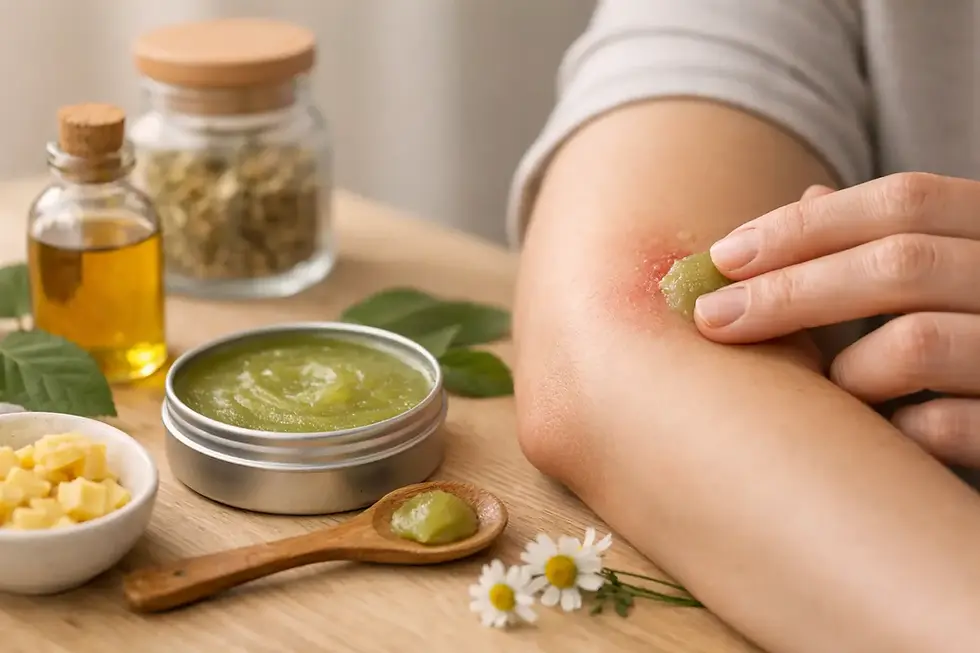
A mosquito bite can turn a quiet evening on the porch into a small but persistent distraction. For a mild reaction on intact skin, basic care usually begins with gently washing the area and cooling it. Some people also like to use a simple balm on dry, unbroken skin around the bite, but its role should remain modest: providing surface moisture and comfort rather than treating the bite itself.
A salve is not a one-size-fits-all answer, and it is not appropriate for every bite or sting. Choosing carefully means looking at the condition of the skin, reading the complete ingredient list, and recognizing the signs that call for medical care rather than another topical product.
What a Cosmetic Salve Can—and Cannot—Do
Salves are typically oil-based topical preparations made from botanical oils, butters, waxes, and sometimes infused herbs or essential oils. Unlike a water-based lotion, they form a richer layer over the skin.
On dry, intact skin, an oil-and-wax salve can help reduce surface moisture loss and leave the area feeling softer and more comfortable. Do not apply it to scratched-open, bleeding, weeping, or otherwise broken skin unless the product has been specifically formulated and labeled for that use.
A cosmetic salve should not be expected to neutralize venom, stop an allergic reaction, prevent infection, or immediately eliminate pain, itching, or swelling. Basic first aid and appropriate medical care remain more important than the texture or botanical ingredients of a topical product.
Read the Ingredient List Before the Front Label
Natural topical products are not all alike. A botanical name on the front of a jar tells only part of the story, so turn it over and read the full ingredient list. A well-made formula is usually easy to understand: a base of oils or butters, a wax for structure, and a focused selection of plant ingredients.
Start With the Base
Plant oils and butters determine how a salve feels. Olive oil, sunflower oil, jojoba oil, coconut oil, shea butter, and cocoa butter are common examples. Some make a soft, spreadable salve; others create a firmer balm that stays put in warm weather. Beeswax is often used to give a traditional salve its protective texture, while plant waxes may be used in vegan formulas.
There is no universally best base. If you dislike a heavy or shiny finish, choose a lighter-feeling formula and use less. If your skin tends to feel dry after time outdoors, a richer salve may feel more comfortable. For people with known sensitivities, the simplest formula is often the most sensible place to start.
Consider Botanicals with a Practical Eye
Calendula, plantain leaf, chamomile, and aloe are familiar ingredients in gentle personal-care formulas. Their presence may suit shoppers who enjoy traditional herbal preparations, but a botanical ingredient is not automatically appropriate for every person or every patch of skin.
Essential oils deserve extra attention. Peppermint, tea tree, lavender, eucalyptus, and citronella can have a noticeable aroma and a cooling or tingling sensation. This sensation is not proof that a product is working. On irritated skin, it may instead be a sign that the formula is too strong. Avoid applying undiluted essential oils to bites. A finished product should state its ingredients clearly and be used according to its label. Avoid formulas containing strongly aromatic essential oils for babies, very young children, or highly sensitive skin unless the product is specifically labeled for that age group.
Fragrance is another consideration. A salve with no added fragrance, or one with a very short ingredient list, may be the more comfortable option for sensitive skin. If you are trying a formula for the first time, test a small amount on an unbroken area of skin first and wait to see how your skin responds.
How to Use a Salve Without Overdoing It
Begin with clean hands and gently wash the area with mild soap and water. Pat it dry and apply a clean, cool compress for 10 to 20 minutes. Once the skin is dry, inspect it carefully.
If the skin remains fully intact and you choose to use a cosmetic salve for added moisture, warm a very small amount between clean fingertips and apply only a thin layer. Stop using it if the area begins to sting, burn, redden further, or feel more irritated.
Resist the urge to layer multiple products at once. Combining a salve, strong essential oils, fragranced body lotion, and several other topical products can make it harder to tell what your skin tolerates. Keep the routine simple, especially if the area is already irritated.
Loose clothing and trimmed nails can also help minimize the friction that keeps a small bite feeling more noticeable.
Avoid sharing a jar directly between people if fingers are going into the product. Use a small clean spatula, a cotton swab, or freshly washed hands to help keep the product in good condition. Store the container away from heat and direct sunlight, and follow the maker’s guidance on use and shelf life.
Do Not Assume Every Salve Has the Same Purpose
The words salve and balm are often used loosely, but products with similar textures may be formulated for very different purposes. A moisturizing botanical balm, a medicated anti-itch product, and a traditional drawing preparation are not interchangeable.
Read the intended-use statement and directions rather than choosing by name, color, or texture alone. Do not assume that a product is suitable for direct application to a bite or sting, broken skin, or a child unless the label clearly supports that use.
When Not to Rely on a Topical Product
Seek emergency help immediately for trouble breathing, swelling of the lips, tongue, face, or throat, faintness, confusion, widespread hives, or a rapidly worsening reaction after a bite or sting.
Contact a healthcare professional promptly if you notice increasing pain, expanding redness, warmth, pus or other drainage, fever, red streaks, or symptoms that continue to worsen rather than improve. Tick bites deserve particular attention if the tick cannot be removed completely or if a rash, fever, headache, or body aches develop afterward.
A More Intentional Outdoor Kit
A useful outdoor kit does not have to be elaborate. Keep a clean cloth, access to mild soap or gentle cleansing wipes, and a way to cover up when insects are active. If you carry a cosmetic salve, keep it tightly sealed and use it only according to the label on dry, intact skin. Prevention remains the quieter hero: breathable long sleeves, checking screens, removing standing water near home, and choosing an insect repellent appropriate for your plans can reduce the need for after-bite care in the first place.
When a minor bite interrupts an otherwise pleasant evening, keep the response simple: clean the skin, cool the area, avoid scratching, and pay attention to how the reaction develops. A plain cosmetic balm may provide moisture to nearby dry, intact skin, but careful observation and appropriate first aid matter more than an elaborate ingredient list.

Comments