
Essential Oils for Everyday Home Rituals: A Practical Guide

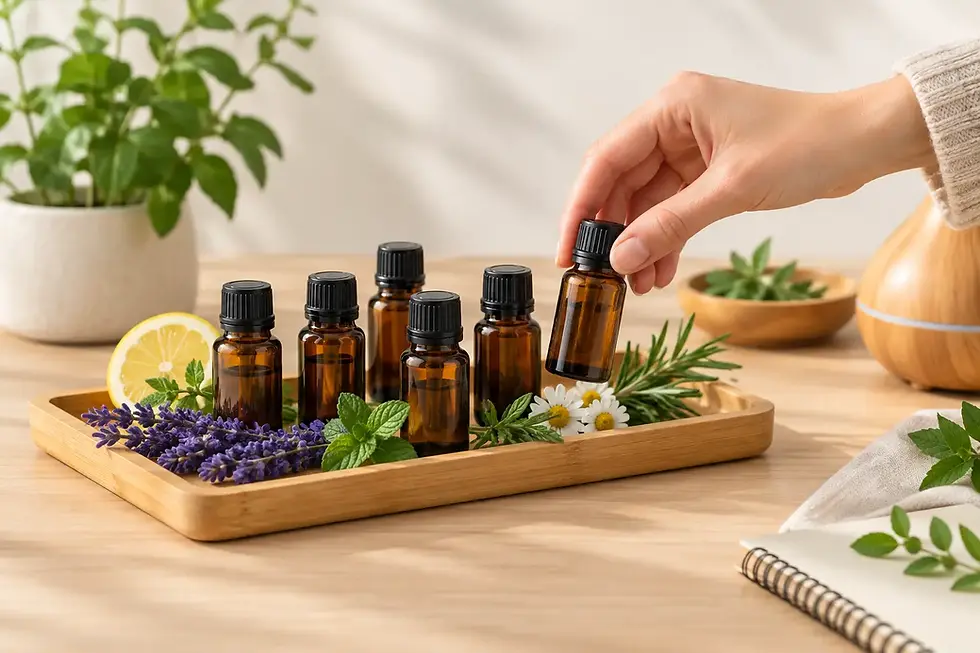
A bottle of essential oil can change the atmosphere of a room in seconds: bright citrus near a morning window, soft lavender beside the bed, grounding cedarwood during an evening wind-down. But essential oils are also highly concentrated plant extracts. Choosing them well means looking beyond a beautiful label and letting quality, intended use, and sensible safety practices guide the ritual.
What Essential Oils Are - and What They Are Not
Essential oils are aromatic compounds extracted from plants, including flowers, leaves, peels, wood, roots, and resins. Many are made through steam distillation, which uses steam to carry volatile aromatic compounds from plant material into a concentrated oil. Citrus oils are often cold-pressed from the peel instead.
That process is why a small bottle can hold such a vivid scent. It is also why a little goes a long way. Essential oils are not the same as dried herbs, herbal tea, fragrance oil, or a plant-infused carrier oil. Each has a different composition, concentration, and place in a home wellness routine.
Their most practical role is sensory. A familiar aroma can help set a tone for a space or create a small transition in the day: a daytime desk ritual desk ritual, a slower shower, a more welcoming entryway. The experience is personal. One person may find peppermint crisp and energizing in the afternoon, while another may prefer its cool intensity only in a bathroom or workout space.
Match the Oil to the Moment
Essential oils become more useful when they are connected to a specific moment rather than collected simply because a scent is popular. Think first about where and when you want to use the aroma: a bright daytime room, a quiet evening corner, a shower ritual, or a simple personal-care routine.
Citrus oils such as sweet orange, lemon, and grapefruit can bring a fresh, lively character to shared spaces. Lavender and geranium offer softer floral profiles, while eucalyptus, rosemary, and peppermint lean crisp and herbaceous. Cedarwood, frankincense, and patchouli bring warmer, deeper notes that may feel especially at home in an evening setting. Room size matters, too. A resinous or mint-forward oil may feel beautifully balanced in an open living space but overwhelming in a small bathroom or office. Start with less than you think you need and give the aroma time to settle before adding more.
The format should follow the ritual. A diffuser works well when you want scent to become part of the room. A ceramic aroma stone or diffuser bracelet creates a more contained experience. For body care, use only products intended for topical use and follow their dilution directions carefully.
You do not need a large collection to create variety. A citrus, a floral or herbaceous oil, and a wood or resin oil can already cover a wide range of everyday moods and spaces. Let your actual routine — not a trend list — decide what earns a place on the shelf.
Start With the Scent You Will Actually Use
A useful essential oil collection can be very small. Rather than buying a large set at once, begin with one or two aromas you genuinely enjoy and can picture using regularly.
Scent preference is personal. Peppermint may feel crisp and refreshing to one person and too intense to another. Patchouli can feel warm and earthy or simply too heavy. There is no universally “best” starter oil.
Live with a scent for a few days and notice where it fits naturally into your routine. If you keep reaching for it, it has earned its place. If not, a larger collection is unlikely to solve the problem.
Thoughtful Ways to Use Essential Oils at Home
Diffusion is one of the simplest ways to enjoy an aroma. Follow your diffuser manufacturer’s water and drop guidance rather than assuming more oil will create a better experience. A modest amount is often enough, particularly in a small room. Consider diffusing for a limited period, then giving the room a break and opening a window when practical.
A personal aroma ritual can be even simpler. Add a drop or two to a diffuser bracelet, ceramic scent stone, or tissue placed nearby, following the item’s instructions. This option offers a more contained experience than scenting an entire room and can be useful in shared spaces.
For body use, essential oils should generally be diluted in a suitable carrier oil or an appropriately formulated product. Carrier oils such as jojoba, fractionated coconut, or sweet almond oil help spread the oil across the skin and reduce direct exposure to concentrated botanicals. Do not apply undiluted essential oil to the skin unless the product is specifically formulated and labeled for direct topical use.
A shower can also become a simple sensory pause. Place a few drops on a shower-safe aroma stone or on a damp washcloth positioned away from direct skin contact, rather than adding oil directly to the floor where it may create a slippery surface. The warm steam carries the aroma without turning a routine into a production.
Safety Belongs in the Ritual
Natural does not automatically mean gentle in every form or for every person. Essential oils can irritate skin, trigger discomfort from strong scent, or be unsuitable around certain household members. Read the individual product label before use, and treat each oil as its own ingredient rather than assuming the same rules apply across the category.
For a new topical product, a small patch test can help identify obvious sensitivity. Keep oils away from eyes, inner ears, and mucous membranes, and wash hands after handling them. Citrus oils can have additional sun-sensitivity considerations when used on skin, especially certain cold-pressed varieties. If a label includes sun-exposure warnings, follow them carefully.
Do not assume an essential oil is suitable to add to food or drinks because its source plant is familiar. Product format, concentration, and intended use matter. Keep bottles securely closed and stored out of reach of children and pets. If your household includes pets, babies, or anyone especially scent-sensitive, use extra restraint with diffusion and choose well-ventilated spaces.
People who are pregnant, nursing, managing a health condition, or taking medication should seek personalized guidance from a qualified healthcare professional before using essential oils, particularly on skin or in concentrated forms. This is not about making a routine complicated. It is about giving powerful botanical materials the care they deserve.
Storage Protects Aroma and Value
Light, heat, and oxygen gradually change an oil’s aroma over time. Amber or dark glass helps limit light exposure, while a tightly closed cap slows oxidation. Store bottles upright in a cool, dry cabinet rather than on a sunny windowsill, in a hot car, or near a steamy shower.
Citrus oils tend to have a shorter aromatic life than many wood and resin oils, but storage conditions make a meaningful difference for all of them. If an oil begins to smell noticeably flat, sharp, or unlike its original profile, it may be time to retire it from routine use. Write the opening date on the label or keep a small note with your collection.
Choosing essential oils with care is less about chasing an elaborate ritual and more about making room for a few well-chosen moments. A scent you genuinely enjoy, a transparent label, and a mindful approach can be enough to make an ordinary corner of the day feel a little more intentional.


Comments