
How to Select Essential Oils With Confidence
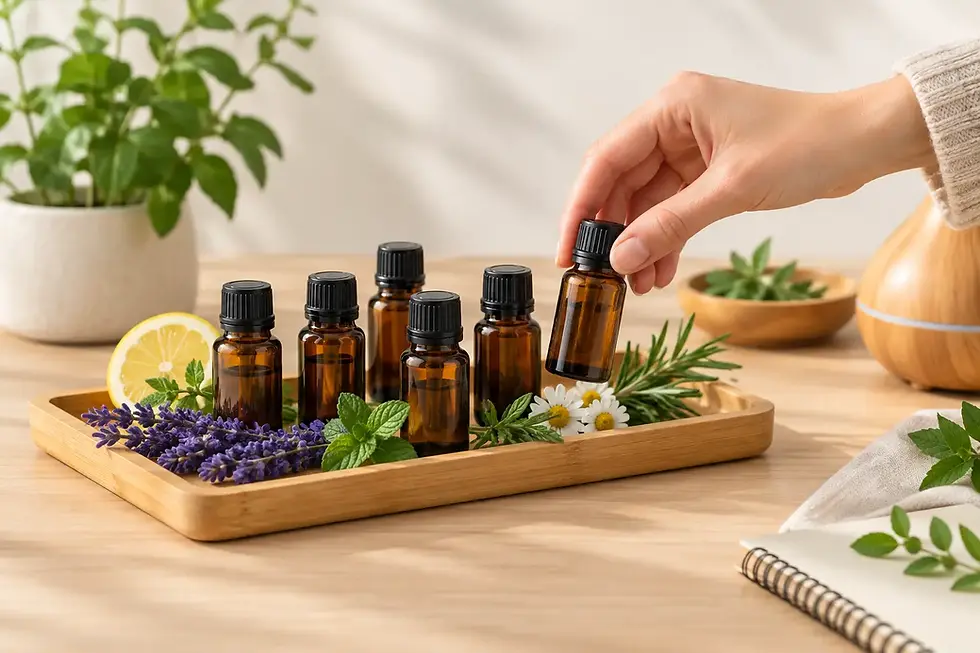
A small amber bottle can hold an impressive amount of information - if you know where to look. Learning how to select essential oils is less about finding one “best” oil and more about matching a well-made product to your intended use, scent preferences, and household needs. The label, the bottle, and the seller’s transparency all tell part of the story.
Essential oils are concentrated aromatic extracts from plants. They can bring a fresh, grounding, floral, or woodsy note to a shower ritual, diffuser blend, properly formulated linen spray, or properly diluted body oil. But concentration is also why thoughtful selection and careful use matter. A beautiful scent is a good start. Clear details behind it are better.
Start With the Plant Behind the Name
Common names are familiar, but they are not precise. “Lavender,” for example, can refer to several species with different aromatic profiles. A quality label should identify the plant’s botanical name, usually in Latin, such as Lavandula angustifolia. This tells you exactly which plant was used and makes it easier to compare products accurately.
The label may also note the plant part used. Essential oil can be distilled from leaves, flowers, peel, wood, resin, roots, or seeds, and that detail affects the finished aroma. Sweet orange oil commonly comes from the peel, while frankincense is distilled from resin. Neither is inherently better - they simply offer different characteristics.
If an oil is sold under a broad or poetic name without a botanical identity, pause before purchasing. That does not automatically mean the product is poor, but it makes an informed comparison harder. For a curated home collection, specificity is worth looking for.
How to Select Essential Oils by Intended Use
Begin with the moment you want the oil to support. This practical step keeps a growing collection from becoming a shelf of rarely opened bottles.
For a diffuser, aroma may be your first consideration. Citrus oils can feel bright and clean in a daytime space, while lavender, cedarwood, and frankincense are often chosen for a quieter evening atmosphere. For a shower or bath-adjacent ritual, you may prefer a scent that feels fresh without being overpowering. For a DIY body oil, the skin-use guidance and proper dilution become central.
It also helps to consider how a scent feels in your actual environment. A richly resinous oil may be lovely in a spacious living room but too intense in a small office. Peppermint can read as crisp and energizing to one person and sharply medicinal to another. Buy for your own routine rather than a trend-driven scent list.
A focused starter selection is often more useful than a large set. One citrus, one floral or herbaceous oil, and one grounding wood or resin oil offer plenty of range for simple diffusion blends. If you mainly want one recognizable aroma, a single oil may be the more thoughtful choice than a pre-made assortment.
Read the Label Beyond the Front Panel
Words such as “natural,” “pure,” and “therapeutic grade” can sound reassuring, but they do not all carry the same practical meaning. In particular, “therapeutic grade” is not a universally regulated quality standard. Treat broad marketing language as a starting point, not proof of sourcing or composition.
Look instead for details that can be checked: the botanical name, country or region of origin when available, extraction method, net volume, and ingredient list. For a single essential oil, the ingredient list should generally identify that one botanical oil. A blend should clearly name its ingredients rather than hiding them behind vague fragrance language.
Reputable sellers may also make batch-specific documentation, such as a certificate of analysis or gas chromatography-mass spectrometry testing, available upon request or through their product information. These tools help assess composition and consistency, though a test report is only one part of quality. Responsible sourcing, storage, accurate labeling, and realistic safety instructions matter too.
Understand Extraction Methods and Their Trade-Offs
The extraction method should suit the plant. Steam distillation is common for leaves, flowers, woods, and resins. It uses steam to carry volatile aromatic compounds from plant material before the oil is collected. Many classic essential oils, including eucalyptus and rosemary, are produced this way.
Cold expression, also called cold pressing, is typical for citrus peels. It preserves the bright, recognizable character of oils such as lemon, bergamot, and sweet orange. Citrus oils can be especially uplifting in a diffuser, but some expressed citrus oils can increase skin sensitivity to sunlight when used topically. Product-specific directions matter.
You may also see CO2 extracts or absolutes. These can be richly aromatic and valuable in perfumery or personal-care formulations, but they are not always interchangeable with steam-distilled essential oils. An absolute may contain traces of extraction solvent and is usually best chosen with a clear understanding of its intended use. The right format depends on what you plan to make or enjoy.
Choose Packaging That Protects the Oil
Essential oils are sensitive to light, heat, and air. Dark glass bottles, usually amber or deep blue, help protect them from light exposure. A secure cap or orifice reducer makes measuring easier and lowers the chance of spills. Clear glass may be visually appealing, but it offers less light protection unless stored carefully in its outer carton or a dark cabinet.
Dark glass is generally the preferred packaging for concentrated essential oils. Some plastics may be compatible for specific formulations or short-term use, but the packaging should be chosen specifically for the oil and its intended storage conditions.
Once home, store bottles upright in a cool, dry place away from direct sun and humidity. The bathroom windowsill may look inviting, but a closed cabinet outside the steamiest area is usually kinder to the oil. Write the date opened on the label if you keep several bottles. Citrus oils in particular tend to change more quickly after opening than many wood or resin oils.
Consider Sourcing Without Reducing It to a Label Claim
Plant origin matters because soil, climate, harvest timing, and distillation practices can shape an oil’s aroma and availability. It is reasonable to value brands that share where and how they source, but sustainability is rarely captured by one word on a front label.
Some plants are abundant and fast-growing. Others are slow-growing, threatened by overharvesting, or associated with complex supply chains. A responsible retailer should be able to speak clearly about its standards and avoid treating rare ingredients as disposable trends. Transparent sourcing, sensible packaging, and ingredient choices that respect plant availability all deserve attention.
Organic certification can be meaningful when it is verified and relevant to the ingredient, but it is not the only marker of care. A non-certified oil may still come from a thoughtful producer, while an organic claim should be backed by clear certification information. Look for substance, not just a collection of appealing symbols.
Make Safety Part of the Selection Process
A well-chosen essential oil should come with straightforward use guidance. Essential oils are highly concentrated and are not automatically suitable for direct application to skin. When making a body oil, blend a small amount into an appropriate carrier oil and follow the supplier’s recommended dilution guidance. A patch test can help identify an individual sensitivity before broader use.
Do not assume that an oil’s fresh aroma means it is appropriate to ingest. Do not ingest essential oils unless the specific product is explicitly intended and labeled for internal use and you have appropriate professional guidance. Keep bottles away from children, avoid contact with eyes and mucous membranes, and use extra care around pets, who can be more sensitive to aromatic compounds than people.
If you are pregnant, nursing, managing a health condition, taking medication, or choosing oils for a child, speak with a qualified healthcare professional before use. Stop using an oil if irritation or discomfort occurs. These are not restrictive rules - they are what allow an aromatic ritual to remain calm, intentional, and enjoyable.
Let Your Senses Have the Final Say
After checking the practical details, open the bottle and notice your response. A quality oil does not need to smell identical every time you encounter that plant in nature. Harvest conditions create variation. Still, the aroma should feel clear rather than stale, flat, or oddly synthetic.
Start slowly. Try one or two drops in a diffuser, or make a simple diluted blend rather than combining every bottle at once. Over time, you will learn which scents belong in your morning routine, which make a room feel settled, and which are simply not for you. That personal knowledge is one of the most valuable parts of building a considered essential oil collection. Explore our collection of essential oils.


Comments