
Natural Deodorant Ingredients Guide for Daily Use
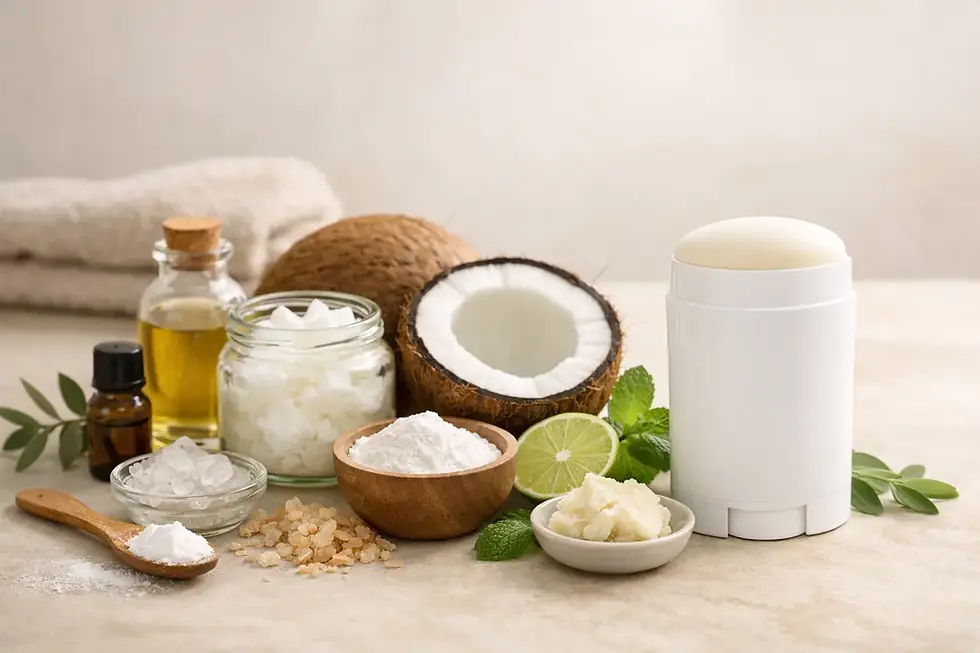
A tube of deodorant can look simple, yet the ingredient list often tells a fuller story about how it will feel, smell, and fit into your routine. This natural deodorant ingredients guide is designed to help you read that list with more confidence, whether you prefer an unscented cream, a fresh herbal stick, or a refillable format with a subtle botanical scent.
The most useful place to begin is with expectations. Deodorant is generally used to help manage underarm odor. Antiperspirant is a separate category designed to reduce perspiration and is regulated as an over-the-counter drug in the United States. Some deodorant formulas also contain absorbent ingredients that can make the skin feel less damp without actually reducing sweat production. A natural deodorant may be a satisfying everyday option for many people, but its performance depends on the formula, your skin, your activity level, and even the weather.
Natural Deodorant Ingredients Guide: The Building Blocks
Natural deodorant formulas commonly combine absorbent powders, odor-control ingredients, skin-conditioning oils or butters, and fragrance. Not every ingredient needs to be botanical to be thoughtfully chosen. In the United States, there is no formal FDA or USDA definition of “natural” for cosmetics, so a clear ingredient list and transparent product description are more useful than the word alone.
Absorbents Help with the Damp Feeling
Arrowroot powder, tapioca starch, kaolin clay, and magnesium carbonate are often included to absorb moisture at the skin’s surface. They do not stop sweat, but they can help an underarm area feel drier and less sticky during a workday, commute, or gentle movement.
Texture is the trade-off. Powders can leave a soft, dry finish, though a formula with a high powder content may feel chalky or transfer to dark fabrics. Cream deodorants often feel especially smooth at first, while sticks may be more convenient for quick, no-mess application.
Odor-Control Ingredients Address What Causes Odor
Sweat itself is mostly odorless. Underarm odor develops when naturally occurring skin bacteria interact with components in sweat. Deodorants use a range of ingredients to help manage that process and create a fresher feel.
Sodium bicarbonate, or baking soda, is commonly used in deodorant formulas, but it may not feel comfortable on every skin type, particularly after shaving or when the underarm is already irritated. Baking-soda-free formulas may instead use ingredients such as magnesium hydroxide, zinc ricinoleate, triethyl citrate, or combinations of several odor-control ingredients.
No single deodorant system is universally gentler or more effective. The complete formula and your individual skin response matter more than one featured ingredient.
Some deodorants feature probiotics, fermented ingredients, or prebiotics. These are interesting additions, but it is sensible to view them as part of the overall formula rather than as a reason to expect dramatic results. The base, odor-control system, and your skin’s comfort still matter most.
Oils, Butters, and Waxes Shape the Glide
Coconut oil, shea butter, cocoa butter, jojoba oil, and sunflower oil are frequently used to give sticks and creams their glide. Beeswax, candelilla wax, and carnauba wax can add structure, helping a stick stay solid in the tube.
These ingredients influence the experience as much as the performance. A richer formula may feel comforting on dry skin but can soften in a hot bathroom or car. A lighter, starch-forward formula may suit those who dislike a waxy finish. If coconut oil tends to feel heavy on your skin, look for a formula built around lighter plant oils or a gel-cream texture.
Fragrance Deserves a Closer Look
Essential oils and botanical extracts can make applying deodorant feel like a small sensory ritual. Lavender, eucalyptus, citrus, mint, rose, and tea tree are common choices. Still, natural fragrance ingredients can be irritating for some people, particularly when several aromatic oils are combined.
An unscented deodorant is often the simplest choice for sensitive skin, fragrance-sensitive households, or anyone who prefers their personal fragrance to stand on its own. If detailed scent transparency matters to you, look for brands that voluntarily identify the aromatic ingredients they use. U.S. cosmetic labeling rules may allow a fragrance mixture to appear simply as “fragrance,” so the level of detail varies from brand to brand. A lighter scent can also be more comfortable in close quarters than a strongly perfumed formula.
How to Read a Natural Deodorant Label
Start near the beginning of the ingredient list, where you will usually get the clearest picture of the formula’s foundation. Under U.S. cosmetic-labeling rules, ingredients present above 1% are generally listed in descending order of predominance; ingredients at 1% or less may appear afterward in any order. That means the list is useful for understanding the overall formula, but it is not a precise recipe. Then scan for the ingredient that handles odor, such as magnesium hydroxide, sodium bicarbonate, zinc ricinoleate, or triethyl citrate.
Next, consider what is not stated clearly. If a product is described as natural but provides little detail about fragrance, packaging materials, or ingredient sourcing, it may be harder to decide whether it aligns with your preferences. Clear labels do not guarantee that a formula will work perfectly for every body, but they make comparison far easier.
For water-based creams and roll-ons, you may also see preservatives such as potassium sorbate, sodium benzoate, or benzyl alcohol. Products containing water need an appropriate preservation strategy to help control microbial growth during normal use. What matters is that the complete formula has been properly developed and used as directed.
Choosing for Sensitive or Recently Shaved Skin
Underarm skin is prone to friction, shaving-related sensitivity, and irritation from heat. A gentle formula is usually less about finding one universally “safe” ingredient and more about reducing the number of possible triggers for your own skin.
Try a small amount on a limited area first and pay attention to how your skin responds. Stop using the product if persistent redness, itching, burning, swelling, or another reaction develops. Consider a baking soda-free and fragrance-free option if you have had sensitivity in the past, and avoid applying deodorant to broken or visibly irritated skin.
Changing products can also require a brief adjustment in application. A natural deodorant is not intended to block perspiration, so you may notice normal moisture more than you did with an antiperspirant. That does not mean your body needs a special transition or cleansing process. It simply means the product works differently.
Packaging Is Part of the Formula Story
A deodorant’s container affects both convenience and waste. Traditional plastic sticks are widely available and durable, while paper tubes can reduce plastic use but may be more sensitive to heat and may require a firmer push from the base. Refillable systems can be a practical option when the refill format and materials are clearly explained.
Look beyond the words “eco-friendly.” Details such as recycled content, refill availability, component separation, and local recycling guidance offer a more grounded picture. The most responsible choice is often the one you will use consistently and dispose of according to your local options.
Find the Formula You Will Actually Reach For
The best natural deodorant is not necessarily the one with the longest list of botanicals or the most elaborate packaging. It is the one that feels comfortable, suits your routine, and gives you enough confidence to wear it regularly. One person may prefer a powder-rich stick with baking soda, while another may feel more comfortable with a baking soda-free cream or roll-on. The better match depends on the complete formula, texture, scent, and your individual skin response.
Give yourself permission to choose by texture, scent, and practical fit. A clear label, a modest amount of product, and a formula your skin enjoys can turn an ordinary daily step into a more intentional piece of personal care.


Comments