
Mushroom Powder Usage: 9 Easy Everyday Ideas
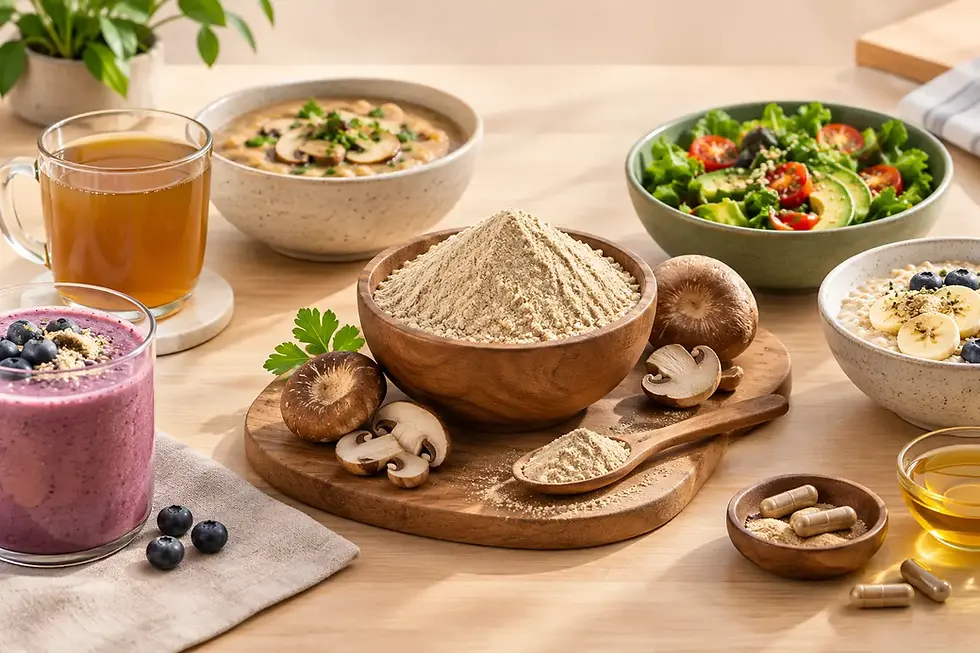
A jar of mushroom powder can look almost too simple to be useful: finely milled, earthy in color, and easy to overlook in a busy pantry. Yet thoughtful mushroom powder usage can add savory depth to familiar foods and create small, intentional rituals around your morning drink, lunch, or evening meal. The key is not adding it to everything. It is choosing preparations where its flavor and format make sense.
Mushroom powders come in different forms. Some are made by drying mushrooms and milling them finely, while others are produced by extracting mushroom material and drying the resulting extract into a powder. Some are culinary powders, valued primarily for their deep umami flavor. Others are made from varieties often used in traditional wellness practices, such as lion's mane, reishi, cordyceps, turkey tail, or chaga. The right use depends on the ingredient, how it was processed, and what you enjoy eating and drinking.
Start With the Powder in Your Jar
Before deciding where to add a mushroom powder, read the label closely. A single-ingredient culinary mushroom powder, such as shiitake or porcini, behaves much like a seasoning. It can bring roasted, brothy character to soups, grains, sauces, and vegetable dishes.
Functional mushroom powders can vary more widely. Some contain the whole fruiting body, while others are extracts designed to dissolve readily in liquids. Some blends include cocoa, spices, coffee, sweeteners, or other botanicals. Those differences affect flavor, texture, and serving directions, so the package is a better guide than a one-size-fits-all scoop.
For supplement-style powders and extracts, follow the product’s serving directions. For culinary mushroom powders, start with a modest amount for flavor and adjust to taste. Mushroom powders tend to be more enjoyable when they support the recipe rather than dominate it.
Mushroom Powder Usage in Drinks
Warm drinks are one of the easiest entry points because a little powder disperses well with whisking or blending. They also make it simple to build a repeatable routine without turning preparation into a project.
1. Stir It Into Coffee or a Coffee Alternative
Earthy mushroom powders pair naturally with coffee's roasted bitterness. Add the powder to your grounds before brewing only if the product directions allow it. Otherwise, whisk it into brewed coffee with a splash of milk or a plant-based alternative. A handheld frother is especially helpful for reducing clumps.
If you prefer less coffee, blend the powder into a roasted chicory drink or a lightly caffeinated tea latte. Cinnamon, vanilla, and a small amount of maple syrup can round out more assertive flavors without masking them completely.
2. Make a Cocoa-Style Evening Drink
Unsweetened cocoa, warm milk, and a mushroom powder with a deep, woodsy profile can make a comforting cup. Choose a powder whose label suggests beverage use, then whisk it first with a tablespoon of warm liquid to make a smooth paste. Add the remaining milk gradually.
This is a flavor-first ritual, not a promise of a particular result. If a powder tastes too bitter on its own, cocoa and a pinch of cinnamon are often a better pairing than extra sweetener.
3. Blend It Into Smoothies
A smoothie is practical for powders with a stronger flavor or slightly grainy texture. Banana, dates, nut butter, oats, cocoa, and frozen berries all provide enough body to carry a modest serving. Start small, since a powder that disappears in hot cocoa may stand out in a bright berry smoothie.
Cold drinks can leave some powders less fully dissolved. A high-speed blender helps, but a small amount of settled powder at the bottom of the glass is normal with minimally processed products.
Bring More Depth to Everyday Food
The ideas below work best with culinary mushroom powders or products whose labels specifically allow use in cooking. Concentrated extracts and supplement-style blends should be used according to their package directions.
Culinary mushroom powder deserves a place beside salt, pepper, and dried herbs. It is a quiet way to add depth to foods that benefit from a savory backbone, from grains and beans to soups, sauces, and vegetable dishes.
4. Add It to Soups, Stews, and Broth
Stir mushroom powder into lentil soup, tomato sauce, vegetable stew, or a simple broth. For most family-size pots, begin with a teaspoon, taste after a few minutes, and add more only if needed. The flavor settles in as the dish cooks, so there is no need to rush.
Creamy soups are particularly forgiving. Blended cauliflower, squash, potato, or white bean soups have enough richness to carry earthy notes while still letting the vegetables lead.
5. Season Grains and Beans
Rice, quinoa, farro, and beans can taste more complete with a small amount of mushroom powder stirred in during cooking. It also works well in a vinaigrette for grain salads, especially alongside roasted vegetables, parsley, and lemon.
For a simple weeknight side, toss warm rice with olive oil, a pinch of mushroom powder, cracked pepper, and chopped herbs. Taste before adding salt, since some mushroom blends include sodium or savory seasoning ingredients.
6. Fold It Into Sauces and Gravies
Mushroom powder can lend depth to pasta sauce, pan gravy, and creamy cashew-based sauces. Whisk it into the liquid portion first to avoid dry pockets. A tablespoon of water or stock can help loosen a thick sauce if the powder absorbs more moisture than expected.
This is also a good use for a porcini or shiitake powder that has been sitting in the pantry. Its concentrated flavor can make a simple sauce taste slow-simmered, even when dinner comes together in twenty minutes.
7. Use It in Savory Breakfast Dishes
Eggs, tofu scrambles, breakfast potatoes, and savory oatmeal all welcome an umami note. Add a small pinch while cooking, then balance it with chives, scallions, black pepper, or a little cheese. In this setting, mushroom powder acts more like a seasoning than a supplement.
Avoid adding it directly to a finished egg dish without mixing it in. Fine powder can sit on the surface and taste dusty rather than integrated.
8. Upgrade Homemade Snack Mixes
For roasted chickpeas, nuts, popcorn, or seeds, combine mushroom powder with a little olive oil and your preferred spices. Smoked paprika, garlic powder, rosemary, and nutritional yeast are natural companions. Toss the food while it is still warm so the seasoning adheres evenly.
This method works best with culinary powders and savory blends. A bitter extract intended for beverages may not be the right fit for snacks.
9. Add a Small Amount to Baked Savory Foods
Mushroom powder can work in biscuits, crackers, savory muffins, or a vegetarian burger mixture. Keep the amount restrained - usually a teaspoon or two across a full batch is enough to contribute character without turning the recipe muddy or dry.
Baking is less ideal for an expensive, delicately flavored powder if you mainly want to notice its taste. Save those products for drinks or no-cook applications, and use a fuller-flavored culinary powder where heat and other ingredients are part of the plan.
Heat, Timing, and Flavor: What Actually Matters
The assumption that every mushroom powder must be protected from heat is too broad. Culinary mushroom powders are intended for cooking. Many extracts are also designed for hot beverages. Still, processing varies, and a label may specify whether the product is best stirred into a finished drink, blended, or cooked.
If you are working with a premium powder and want its flavor to remain distinct, add it near the end of cooking. If you are using it for background savoriness in a stew or sauce, adding it earlier is perfectly reasonable. There is no single correct method, only a better match between the product and the recipe.
Flavor also changes by variety. Shiitake and porcini are usually bold and savory. Reishi is often notably bitter. Chaga can be mild and roasted, while lion's mane tends to be gentler but still earthy. Pairing with compatible ingredients is more effective than trying to force a powder into a recipe that fights it.
Store It for Freshness and Ease
Keep mushroom powder in a tightly sealed container away from direct sunlight, heat, and humidity. A cool, dry cupboard is usually suitable. Always use a dry spoon, because moisture can cause clumping and shorten the product's best quality window.
If you use a powder often, a small labeled jar near your tea and coffee supplies makes it easier to remember. Keep the original package or note the best-by date and serving directions, particularly for blends with several ingredients.
A Few Sensible Considerations
Mushroom powders may be sold as culinary ingredients or dietary supplements, depending on the product and how it is formulated and labeled. Review the full ingredient list for added botanicals, caffeine, sweeteners, or common allergens. If you have a mushroom allergy, avoid mushroom powders. If you have a health condition or take medications, a pharmacist or qualified healthcare professional can help you evaluate a new supplement-style product in context.
Most of all, let your own palate guide you. Start with one preparation you already enjoy, use a modest amount, and give the powder a genuine place in the recipe. A good pantry ritual should feel simple enough to repeat - warm, useful, and grounded in ingredients you can recognize.


Comments